FOLLOW ME

Mostrando entradas con la etiqueta mobile. Mostrar todas las entradas

enero 06, 2014

SEWING 2ND SCREEN STRATEGIES


What would you do to increase your sales by 135% overnight?

It happened by mere chance, but there are lessons to learn from the story I'm about to relate.

Antena3TV, a TV Channel from Spain, is broadcasting a series based on a bestselling novel. It tells the story of Sira, a young lady who earns a living sewing clothes in a tailor shop. The story runs in the 1930s, not the best time framework to explore the posibilities for current products' placement or other traditional media gimmicks. 4 episodes later the series is a big hit: 26% share, +5 million average viewers.  A rebump in sales of the book, as expected, took place everywhere...but something else happened: an unexpected 135% increase in sewing machines sales at Amazon.es

Not 35%... 135% increase, out of nowhere. Regular sales multiplied by 2.35.

Was this jump due to the TV Series? You bet it was! Sales at the unusual 10:00 to 24:00 time frame (the time the show is on) went up 124% in broadcasts days!  This experience would have been IMPOSSIBLE just a few years ago even with e-commerce sites like Amazon already present and running. Mobile makes the real difference. Consummers are watching TV shows alongside their smartphones and tablets.

There are, of course, market situations that helped this success. The economic crisis in spain is making more people refurbish their clothes or think about starting their own clothing repair businesses. But up untill the show started, sewing equipment sales were far from booming.

Buying habits are shifting from instore to online. Mobile was the piece missing to complete the e-commerce puzzle.You better get your company ready for this, or the opportunities will fly away from you, regardless on how good your product is.

What can we learn from this situation?


BEWARE OF THE 2ND SCREEN

Don't understimate the power of mobile. We're witnessing a cultural shift deeper than the one that made us switch from neighborhood small businesses to big stores and shopping malls. People are finding mobile shopping easier and more convenient than instore experiences.

IMPULSE BUYING IS A 24/7 HABIT

Who would have thought people would buy sewing machines on impulse? You better make your products available for sale 24/7 or sales will be missed.

MAKE YOUR PRODUCT AVAILABLE AT AMAZON

Amazon is not a single store. Is a conglomerate of different companies selling under the same umbrella. Opening an online store requires substantial effort and resources. Consider the possibility of selling through Amazon´s infrastructure.

SEIZE THE MOMENT

Evaluate events happening and to come. They may have hidden opportunities for unexpected sales you may take advantage from. Use Social media to newsjack.

BRAND AWARENESS MATTERS, BUT PRODUCT AVAILABILITY MATTERS MORE

Singer, the sewing machines' brand featured in the tv show, and probably the best positioned in the mind of the consumer, was the one making more sales, but there was a shortage of product at the Amazon.es store, and delivery dates for the Singer popular items started to push further in time. Numbers shown that people bought other brands prioritizing delivery dates over product choice.

Mobile means now. Consumers are getting smarter and once they make a decision, they want the chance to get instant gratification. Sew your strategy to the 2nd screen. Take advantage of it or your competitors will.




diciembre 27, 2013

WHAT COMPANIES CAN LEARN FROM SELFIES


Selfies are some of the most shared content nowadays. In fact, if something represents Social Media in its most pure essence, it is the Selfie. A portrait of one self made by ourselves is more than a picture. It is the vision captured by our own eye, not by somebody elses, made to be shared. Isn't that what Social Media is all about? Present ourselves the way we see us? The way we want to be seen?

Celebrities, politicians and the average Joe use them. They give a sense of closeness, of humanity... real people in a digitalized world. They tell a story of what we show as well as of what we hide. They are also the perfect metaphore of a mobile world. Most of them are taken by our camera equipped mobile devices. Even the device is sometimes present in the picture. And the gadget tells about us too. The model, the cover, the way we handle it, the way it has become an extension of our persona.

Companies have much to learn about the "selfie movement".
  • First, because it can be used as a tool. A foundation to construct a profile of our potential customers. A means to understand who they are, what they like, how they see themselves, how they want to be seen, what their interests are. The pilar to filter big data and morph it into a real self. A market researcher's wet dream. If we want to triumph in Social, we must understand the value of the selfie.
  • Second, because it is a way in which Companies too can present themselves to the world. A Company's selfie is a gesture of transparency. A vehicle to show its day to day life, the faces behind the brand. We are not longer our products, we are Social... we, as companies, are Human. Companies are organic selfs, they are alive, living entities, living organisms interacting with society.
  • Third, because selfies are content, story tellers. In the world of Social, stories rule. Our message has to be shaped into a story to capture the eye of the stakeholders. If we want to build meaningful relationships with them, we have to target the hearts of our customers more than their minds. Project emotions, more than data. A selfie of our company does that better than anything else. It makes those relationships personal.

Think about it...

Link to an interesting article about some of the most celebrated selfies of 2013

febrero 22, 2013

SCREEN WARS: THE G-GLASS MENACE


A long time ago, in a living room far, far, away... 

It is a period of screen wars. 
Rebel devices, striking from a hidden base, have won their first victory against the evil Desktop Empire. 

The eyes of the earthlings, eager for content, are fixed on mobile. 
The Big Flat screens of the Republic, yearning attention from their once revered living room thrones, plan their triumphal comeback on board lusty 4K vessels. 

Myriad Content Alliances proliferate through the galaxy. 
Social Platforms fence in their population while loading their weaponry. 

During the battle, Search Engine Knights revealed their ultimate weapon: The Mighty Glass, a nano screened armored device with the power to rule them all… 

What a great year we are enjoying so far!!! In less than two months, 2013 has proven to be very action packed regarding what many of us call the battle of the screens. Big and Fixed vs Small and Mobile vs Smaller and... Wearable!!! Who will win the Screen Wars?

BIG SCREEN SCHEME 

After the 3D fiasco, TV manufacturers put their comeback hopes on SmartTVs and the recent irruption of 4K ultra high def super large screens at the past CES.

Hardware-wise, I appreciate big screen manufacturers' efforts to be appealing, however, I have some concerns about their software and content strategies.

The way I see it, a SmatTV should basically be a large screen with online navigation capabilities, either through Apps or using built in/downloadable browsers; an OS compatible with current navigation protocols, RAM memory and some short of storage drive. Nothing out of the ordinary…

Kidnapping Ecosystems

However, TV Manufacturers seem to suffer an insane fever of  kidnapping fixation. They'd like to trap us into their elaborated ecosystems using crisp seductive devices. In an effort to emulate Apple’s itunes and appstore successful model, TV manufacturers vitaminize their screens with pre-installed applications channeling our access to content through fenced paths.

I do not support their policy, but I understand that, for example, a company like SONY, owner of a vast variety of content and a tradition of exclusivity (BETAMAX, Memory Sticks ) deeply rooted in their corporate culture, would try to capture audiences this way, but it is, in my opinion, a mistake for two main reasons:

  1. None of the manufacturers have the almost religious loyalty base of worshipers that idolize Apple policies and devices. None have a messiah to adore or a prominent Steve Jobs like visionary figure to lead by inspiration. 
  2. Audiences are more intelligent and connected than ever. They want freedom to choose and expand. I find it somehow hard to foresee a future in which better prepared consumers would prefer their choices for content consumption to be limited and decided by someone else other than themselves. 

TV manufacturers know their battlefield is limited to homes and try to rule over their turf, but I’d advise them to be extra careful with how they deal with audiences in our Social Media Driven world.

MOBILE SCREENS GAME PLANS 

Smartphones and tablets dominate the mobile scenery. Laptops are moving away to exile as tablets unmask the content creation proficiency they had hidden behind their content “consumption only” disguise.

Smartphones are no longer the second screen

Most of us expend more time looking to our smartphone's than to any other screen. Besides, it does not longer compete with the big screen, it adds up to the experience of watching live TV. It enhances TV enjoyment with search and social.

Mobile screens rule over the game

Developers, content creators, marketing agencies, consumer companies, profit and nonprofit institutions, public and private, struggle to figure out how to stand above others to catch the eyes mesmerized in mobile screens. 

The plan is to keep muscling up the devices with speed, power and, most important of them all: connectivity.

Connectivity is the name of the game for mobile: with other devices you own; with other people's gadgets; with commercial aparatus in shopping malls, supermarkets, stadiums; with appliances, with urban furniture and street displays; through proximity, through the cloud... you name it. Connectivity to make that screen the remote control of our everything.

GOOGLE GLASS 

And just when we though there was no space for more screens, Google surprises us with the introduction of yet another one: Google Glass.

Game of Thrones


This short of Sci-Fi device, a wearable computer as Sergey Brin likes to call it, revolutionizes the market providing a screen in front of our very eyes... all the time! No more need to distract our head from what we do, or even from other screens, to enhance your experience.

Built in camera to capture, connectivity to share, in an elegantly light device: it’s a win!

It is a serious contender to dethrone the smartphone. Apparently, the way to win the screen wars passed through going smaller.

There are 3 clear benefits for this device over any other: 

  1. Better Portability 
  2. Hands Free Multitasking 
  3. Body Integration: it is not an extension, like regular glasses, it becomes part of yourself. 

I also see evident downsides: 

  1. Voice Command: it is ticklish to speak out commands when you are walking down the street, or watching your kids weekly soccer game, or even watching TV at home. 
  2. Distractive: could you wear one while driving without becoming a risk to others? Or, as Mark Zuckerberg pointed out to Mr Brin : How do you look out from this without looking awkward? 
  3. Being a Stand Alone Device: It could be a point in favor but also against Google Glass. Being a wearable computer implies putting a processor, wifi and mobile networks antennas, making it bulky even with the slim design accomplished so far. 

With smartphones as powerful, connected and ubiquitous as they are today, I foresee Google’s competitors making lighter glasses that would connect with different phones through apps using Bluetooth, letting the phone do all the hard work itself. It would even give hard disk memory to store pics and vids we do not want in the cloud.

Anyways, these are certainly exciting times to live as consumers, tech enthusiasts and Social Media Addicts like myself.

Let the Force be with us!

enero 29, 2013

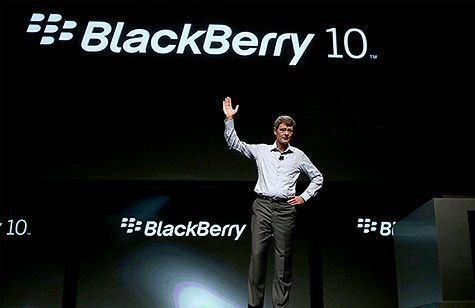
BLACKBERRY 10: AND ON THE 3rd OS.... IT RESURRECTED

(This Post was originally written in spanish for http://adictoalmovil.com)


No more waiting! Time has come and it’s here with a sizeable jump of three, no less, operating system numbers in a leap.  Adapting still to OS7 and its very juicy innovations, (voice over wifi among BlackBerry users included), BlackBerry enthusiasts were jumping head over heels when, last November, RIM announced BlackBerry 10 to be presented on Jan 30th, 2013.

Downhill curve in market share, distressed at the continued loss of their once legendarily loyal customer base, many were the rumors about the future of RIM. A few months ago I had a conversation with two "BlackBerry Evangelists" about to give up on RIM.  Both speculated of being taken over by some giant internet mogul (Jeff Bezos’ comments about evaluating the possibility of Amazon stepping upon the mobile hardware business, emerged strong in the conversation).  They even told me that the only way for RIM to survive would be to surrender to the siren song of Android and become one of a long list of manufacturers that leverages the Google mobile operating system.

In my opinion, this movement would have been a mistake, a poison pill under the tongue, treacherous knife stuck in the heart of RIM’s corporate culture. An irreversible leap into oblivion in shameful disgrace. Not adaptation, but rendition. The killing of RIMs most valuable asset: its independence.

BlackBerry’s new platform 10 hits high score on its basics:

1.       Security and Privacy: its encryption system is nonnegotiable. The Blackberry ecosystem seems bulletproof in regard to privacy, one of the most valued properties by members of the lucrative and very attractive segment of business executives.
2.       Unique User Experience The very rapid learning curve BlackBerry system remains intact. Now they’ve combined it with a pleasantly cool, and impressively zappy online browsing.
3.       Strong relations with Mobile Operators WorldWide: the use of its own servers relieves operators from tons of traffic management they can profit upon in addition to its chunk of BB plans.  

The outcome from this move seems very encouraging. I strongly believe there is a very profitable market waiting for what RIM is offering, only time will tell us if this resurrection attempt came on time to save one of mobile’s most iconic enterprises.